
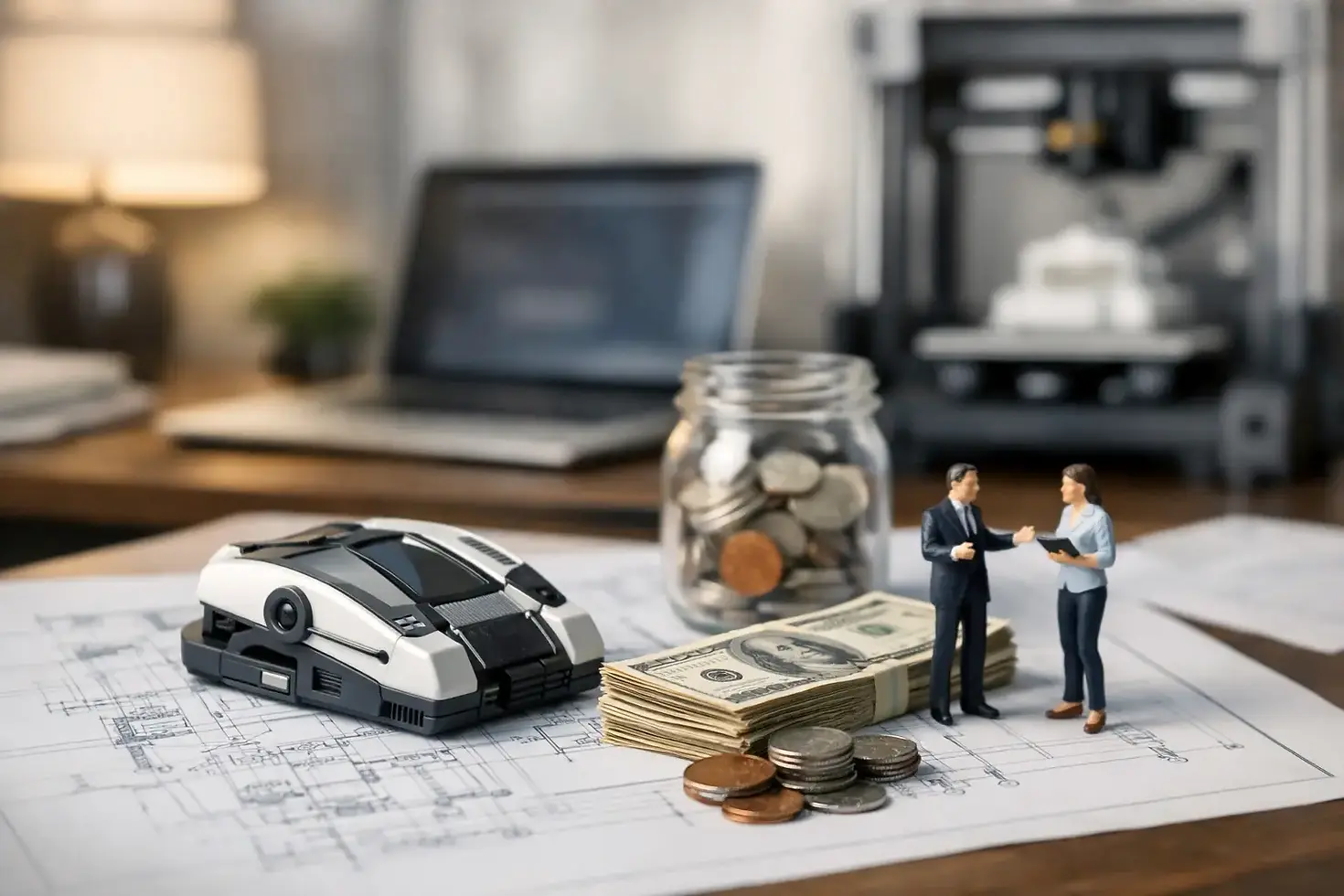
Funding for a Product Prototype: Start Here

A great idea can feel stuck the moment you ask, “Who is going to pay to build it?” Funding for product prototype development is often the first real barrier for independent inventors. You may have a napkin sketch, a working concept, an app idea, or a better version of something people already use. What you may not have is $10,000 or more sitting around for patent work, engineering, samples, and marketing.
That does not mean your idea stops there. It means you need to understand what prototype funding is really for, what investors expect to see, and how to protect your ownership while moving forward.
What Funding for a Product Prototype Actually Pays For
A prototype is not always a polished, store-ready product. It is evidence that your idea can work and that it solves a real problem. Depending on the invention, it could be a 3D-printed physical model, a functional early build, a software mockup, a clickable app demo, or a game design with core mechanics in place.
But prototype funding usually supports more than the prototype itself. A serious commercialization path may include patent searching, advice from registered patent attorneys, a USPTO patent application, product design, engineering, user testing, manufacturing research, branding, packaging, and marketing preparation.
That is why a low-cost homemade model can be useful without being the whole answer. You may be able to build a rough version with common materials, but turning that idea into something manufacturable and protectable takes specialized work. The right funding source helps cover the next decisions, not just the first model.
Why Most Inventors Struggle to Fund a Prototype
Traditional funding can put inventors in a tough position. Banks generally want predictable revenue and collateral, neither of which an idea-stage product has. Personal loans put the financial risk directly on you. Friends and family may be supportive, but they may not understand intellectual property, manufacturing timelines, or the possibility that an idea will need to change after testing.
Crowdfunding can work for products with a clear audience and a compelling story. Still, it often requires you to spend money before launch on prototypes, video production, marketing, fulfillment planning, and sometimes patent protection. Publicly sharing an idea before you have a protection strategy can create concerns as well.
Investors can provide capital and experience, but they are not simply paying for a clever idea. They are looking at commercial potential. Is there a real problem? Is the solution different enough to matter? Can it be built at a price people will pay? Is there a path to protect the concept and get it to market?
This can sound intimidating, but it should also be encouraging. You do not need to walk in with every answer. You need a clear idea, an honest explanation of the problem, and enough detail for qualified people to evaluate the opportunity.
What Makes an Idea More Fundable
Investors do not expect every inventor to be an engineer, patent expert, or sales professional. They do expect the idea to have a reason to exist beyond “it would be nice to have.” The stronger your explanation, the easier it is to see why prototype funding may make sense.
Start with the problem. Explain what frustrates people now, who experiences that frustration, and what they currently do instead. Then explain how your invention, app, game, or business concept makes that situation better. Be specific. “A tool for busy parents” is broad. “A kitchen tool that prevents a common spill during bottle preparation” gives an evaluator something concrete to consider.
You should also be ready to explain what makes your idea different. It does not have to be a product nobody has ever imagined. Many valuable inventions are practical improvements: faster, safer, less wasteful, easier to use, or more affordable. A fresh design alone may not be enough, but a meaningful improvement can have real commercial value.
Finally, be realistic about the stage you are in. Do not claim you have a finished product if you have a concept sketch. Do not pretend there is no competition if similar products exist. Honest details help evaluators understand what support you need and where the opportunity may be.
Protect the Idea Before You Share It Widely
Fear of idea theft keeps many inventors from asking for help. That concern is understandable. Your concept is valuable, and you should not post every detail publicly or hand it to strangers without thinking about confidentiality.
At the same time, trying to handle everything alone can leave you stalled for years. The answer is not silence. It is using a process that takes security seriously. Look for secure submission systems, clear confidentiality practices, and access to legitimate patent professionals when an idea moves forward.
A patent search can help identify relevant existing inventions and show whether your concept may have room for protection. A registered patent attorney can advise on filing strategy and prepare a USPTO patent application when appropriate. These are not small details. A weak filing or skipped search can create expensive problems later.
Keep your own records, too. Save sketches, dates, notes, photos, and test results. Describe how the idea works and what makes it different. These materials can help you communicate the invention clearly during evaluation and development.
A Better Path Than Paying Every Cost Up Front
For many everyday inventors, the biggest challenge is not a lack of ideas. It is the demand to pay thousands of dollars before anyone has seriously evaluated whether the idea can become a business.
An investor-backed evaluation pathway changes that equation. Instead of paying for a stack of services one by one, you submit the concept for review. If it is selected, the development team and investors can fund the work needed to protect, prototype, and commercialize it. The inventor should understand the agreement, including any equity arrangement, while retaining clarity about patent ownership and responsibilities.
TGAP is built around this kind of opportunity for US inventors. Its stated model is simple: submit your idea securely for a one-time $25 fee, receive an evaluation, and if the idea is selected, investor funding can cover patent, prototype, product development, manufacturing, and marketing support. The inventor remains the patent owner, while the partnership structure gives the platform and its investors a stake in helping bring the product to market.
Selection is not automatic, and no legitimate company should promise that every idea will receive funding. That is part of what makes a curated process meaningful. Evaluation helps separate a promising concept from one that may need more work before money is committed.
The Four Steps From Idea to Evaluation
The process should be easy to understand, even if the work behind it is complex.
1. Protect your concept. Organize your explanation, sketches, photos, and any early model or screen design. Avoid public oversharing while you decide how to proceed.
2. Submit securely. Explain the problem, your solution, who would use it, and how far you have developed the idea. A rough sketch is okay if it communicates the concept.
3. Receive an evaluation. Qualified reviewers consider commercial potential, product fit, development needs, and whether the idea may be worth pursuing through an investor-funded pathway.
4. Build through partnership if selected. This is where patent searching, attorney-led filing, prototype development, manufacturing planning, and market preparation can begin without forcing the inventor to fund every major cost alone.
The exact timeline depends on the type of product. A simple consumer accessory may move differently than a medical-related device, a mobile app, or a game. Physical products can require materials testing, supplier quotes, and several prototype rounds. Software may need user feedback, technical builds, and changes to the feature set. Speed matters, but rushing a product into production before it is ready can cost more than taking the time to validate it.
Ask the Questions That Protect Your Future
Before accepting help with a prototype, ask direct questions. Who owns the patent? Who pays for the patent search and filing? Are registered patent attorneys involved? What happens if the idea is not selected? What equity, revenue share, or rights are being requested? Are there additional required fees later?
These questions are not negative. They are the questions of an inventor who plans to build something real. You deserve plain answers in writing, especially when your intellectual property and future earnings are involved.
Be cautious of services that promise guaranteed licensing deals, demand large upfront payments for vague marketing packages, or pressure you to sign before you understand the terms. A good partner explains the process, the risk, and the reason an idea is or is not a fit.
Your first prototype does not need to be perfect. It needs to move your idea from “someone should make this” to “here is how this can work.” If you have been waiting because the costs seem out of reach, get your concept organized, protect what you can, and put it in front of people equipped to evaluate its real potential. The next million-dollar idea may start with nothing more than a clear problem, a smart solution, and the courage to submit it.


Comments